Strategi Distribusi Zakat Laznas Yatim Mandiri Melalui Program Pemberdayaan Ekonomi (Studi Pada Lembaga Amil Zakat Nasional Yatim Mandiri Kepanjen)
Authors
-
 Rizal Rizal
Universitas Raden Rahmad Malang, Indonesia
-
Prayogi R. Saputra
Universitas Raden Rahmad Malang, Indonesia
-
Fiika Tiasari
Universitas Raden Rahmad Malang, Indonesia
DOI:
https://doi.org/10.55757/tasharruf.v2i1.77Keywords:
zakat, independent orphans, empowermentAbstract
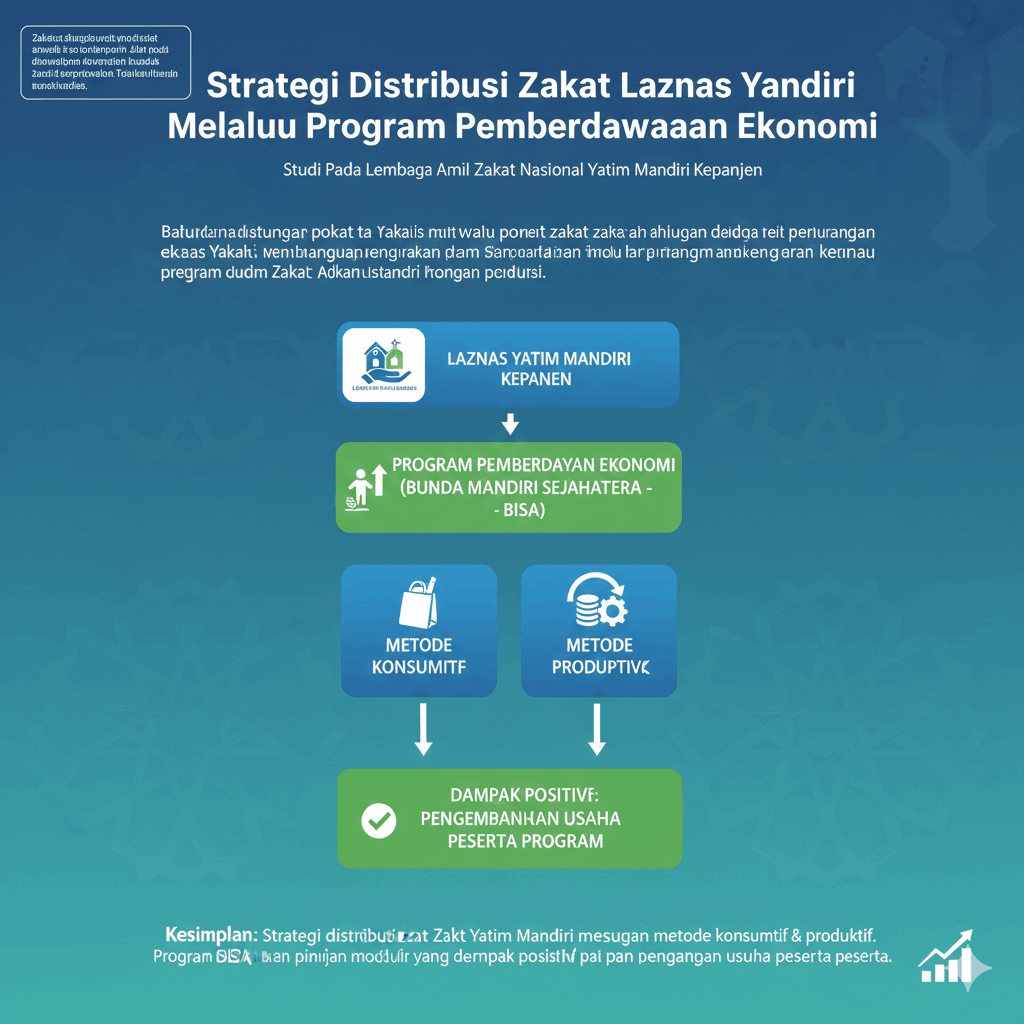
Poverty is a common problem in every country. Meanwhile, zakat is one of the instruments Islamic public finance, one of which is as a medium for distribution of wealth and alleviation poverty. Yatim Mandiri is one of the amil zakat institutions that manages zakat which is has an economic empowerment program through the Bunda Mandiri Sejahtera (BISA) program.
Study it focuses on the CAN program. This study uses a qualitative method with a approach descriptive technique where the data found are presented and then analyzed. This research held at LAZNAS Yatim Mandiri. The results of this study indicate that the distribution strategy Zakat Yatim Mandiri uses two methods, namely, the consumptive method, and the productive method.
Fund distribution zakat through the Bunda Mandiri Sejahtera economic empowerment program by providing loans Revolving capital has a positive impact on the business development of program participants
References
Ahyani, H., Slamet, M., & Mutmainah, N. (2021). The Contribution of the Western World to the Islamic Economy in Indonesia. Al-Amwal : Jurnal Ekonomi Dan Perbankan Syari’ah, 13(2). https://doi.org/10.24235/amwal.v13i2.8619
Dabbous, A. (2021). Does sharing economy promote sustainable economic development and energy efficiency? Evidence from OECD countries. Journal of Innovation and Knowledge, 6(1), 58–68. https://doi.org/10.1016/j.jik.2020.11.001
Ding, C. (2022). Digital economy, technological innovation and high-quality economic development: Based on spatial effect and mediation effect. Sustainability Switzerland, 14(1). https://doi.org/10.3390/su14010216
Hidayat, S. E. (2020). Islamic Economy in ASEAN Countries During the Covid 19 Era. ASEAN Studies Center Universitas Medan Area Webinar.
Li, J. (2022). Digital economy, technological innovation, and green economic efficiency—Empirical evidence from 277 cities in China. Managerial and Decision Economics, 43(3), 616–629. https://doi.org/10.1002/mde.3406
Mealy, P. (2022). Economic complexity and the green economy. Research Policy, 51(8). https://doi.org/10.1016/j.respol.2020.103948
Muttaqien, M. K. (2020). Strategi LAZNAS Al-Azhar dan Peran KSM Binaannya dalam Memberdayakan Pelaku Usaha Mikro. Misykat Al-Anwar Jurnal Kajian Islam Dan Masyarakat, 3(1). https://doi.org/10.24853/ma.3.1.51-64
Steiler, I., & Nyirenda, C. (2021). Towards sustainable livelihoods in the Tanzanian informal economy: Facilitating inclusion, organization, and rights for street vendors. econstor.eu. https://www.econstor.eu/handle/10419/243379
Tang, R. (2024). Can digital economy improve tourism economic resilience? Evidence from China. Tourism Economics, 30(6), 1359–1381. https://doi.org/10.1177/13548166231206241
Terzo, G. (2021). Social capital, social economy and economic resilience of Italian provinces. Papers in Regional Science, 100(5), 1113–1135. https://doi.org/10.1111/pirs.12618
Downloads
Published
How to Cite
Issue
Section
License
Copyright (c) 2021 Tasharruf : Jurnal Kajian Ekonomi dan Bisnis Syariah

This work is licensed under a Creative Commons Attribution-NonCommercial 4.0 International License.