Faktor dan Dampak TKW Terhadap Kondisi Sosial Ekonomi Keluarga Petani
Authors
-
 Nailatul Khoiriyah C
Sekolah Tinggi Agama Islam Salahuddin Pasuruan, Indonesia
Nailatul Khoiriyah C
Sekolah Tinggi Agama Islam Salahuddin Pasuruan, Indonesia
-
Konita Mardia
Sekolah Tinggi Agama Islam Salahuddin Pasuruan, Indonesia
DOI:
https://doi.org/10.55757/tasharruf.v2i2.79Keywords:
Impact of TKW, , Socio-Economic Conditions, Farmer FamiliesAbstract
Poverty is a global problem, often associated with needs, difficulties and deficiencies in various living conditions, especially in the agricultural sector. The picture of material shortages which usually includes daily needs for food, clothing, housing, and health services. The problem of poverty in rural areas is more commonly found in dry land-based areas, and the symptoms of poverty are caused, among others, by the relatively less natural carrying capacity, Socio-economic infrastructure is not evenly distributed and institutions have not yet reached the local community and the quality of human resources is still relatively low.
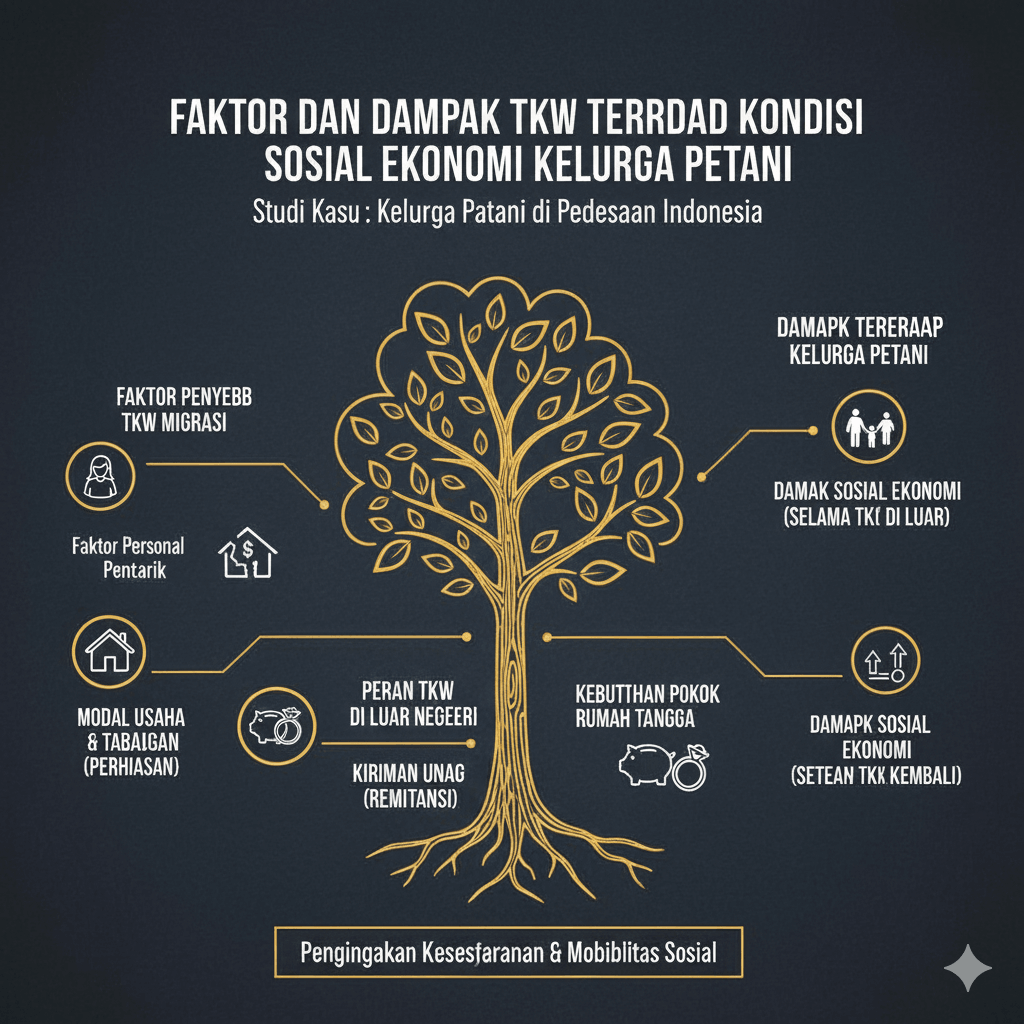
This study aims to describe: (1). What are the factors that cause peasant women to become migrant workers abroad, (2). Describe the impact of international migration of female workers (TKW, on the socio-economic conditions of the farming families left behind, while the TKW is abroad, 3) Describe the impact of international migration of female workers (TKW), on the socio-economic conditions of farming families, after TKW returns to their home area
The results of this study are as follows: the study shows there are (1) factors that influence respondents to make international migration which are grouped into three parts, namely: personal factors, push factors, pull factors. The amount of remittance contributions for basic household needs. The chosen business capital is trading or opening a shop, while savings or savings are in the form of jewelry because according to them jewelry is also useful to show prestige in society.
References
Caglar, A. E. (2022). Determinants of CO2 emissions in the BRICS economies: The role of partnerships investment in energy and economic complexity. Sustainable Energy Technologies and Assessments, 51. https://doi.org/10.1016/j.seta.2021.101907
Cao, Z. (2023). Green finance and economic resilience: Investigating the nexus with natural resources through econometric analysis. Economic Analysis and Policy, 80, 929–940. https://doi.org/10.1016/j.eap.2023.09.033
Ding, C. (2022). Digital economy, technological innovation and high-quality economic development: Based on spatial effect and mediation effect. Sustainability Switzerland, 14(1). https://doi.org/10.3390/su14010216
Li, J. (2022). Digital economy, technological innovation, and green economic efficiency—Empirical evidence from 277 cities in China. Managerial and Decision Economics, 43(3), 616–629. https://doi.org/10.1002/mde.3406
Lin, Y. (2022). Conflict or synergy? Analysis of economic-social- infrastructure-ecological resilience and their coupling coordination in the Yangtze River economic Belt, China. Ecological Indicators, 142. https://doi.org/10.1016/j.ecolind.2022.109194
Mealy, P. (2022). Economic complexity and the green economy. Research Policy, 51(8). https://doi.org/10.1016/j.respol.2020.103948
Ozturk, I. (2022). Does digital financial inclusion matter for economic growth and environmental sustainability in OBRI economies? An empirical analysis. Resources Conservation and Recycling, 185. https://doi.org/10.1016/j.resconrec.2022.106489
Tang, R. (2024). Can digital economy improve tourism economic resilience? Evidence from China. Tourism Economics, 30(6), 1359–1381. https://doi.org/10.1177/13548166231206241
Usman, A. (2021). The effect of ICT on energy consumption and economic growth in South Asian economies: An empirical analysis. Telematics and Informatics, 58. https://doi.org/10.1016/j.tele.2020.101537
Wang, X. (2022). Determinants of Regional Economic Resilience to Economic Crisis: Evidence from Chinese Economies. Sustainability Switzerland, 14(2). https://doi.org/10.3390/su14020809.
Downloads
Published
How to Cite
Issue
Section
License
Copyright (c) 2021 Tasharruf : Jurnal Kajian Ekonomi dan Bisnis Syariah

This work is licensed under a Creative Commons Attribution-NonCommercial 4.0 International License.